


As the 2026 Spring Festival draws near, the festive cheer is growing stronger, and the longing for home deepens for every wanderer far away.
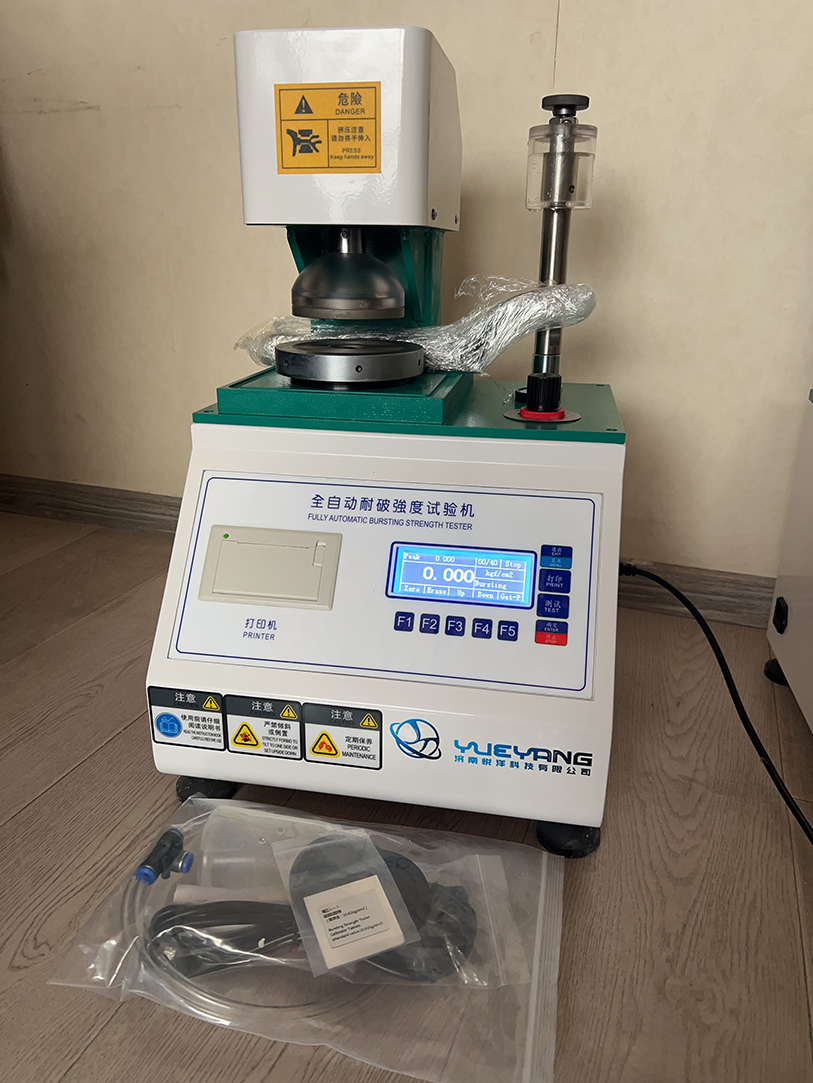
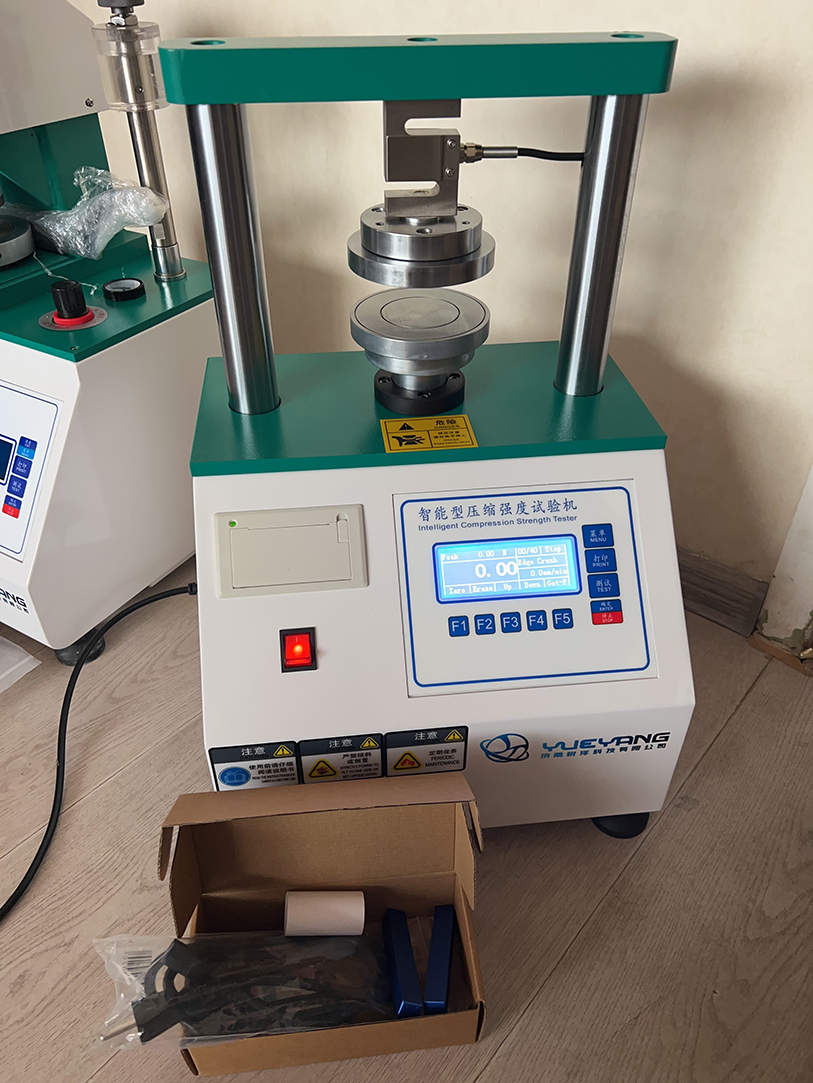
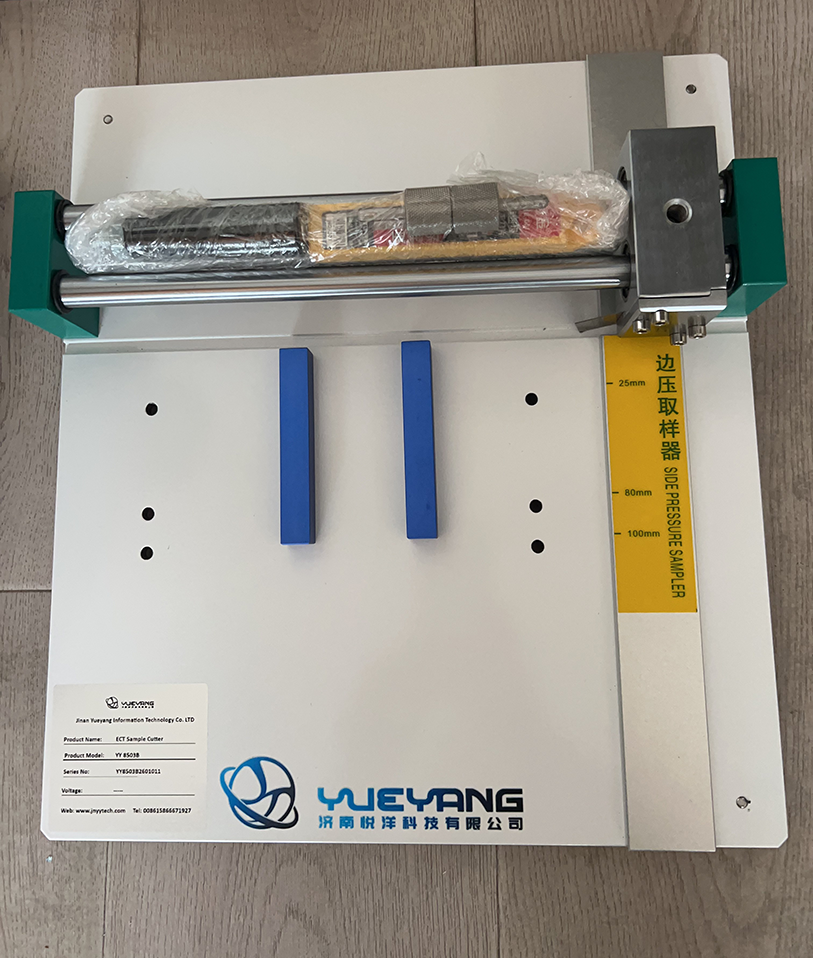
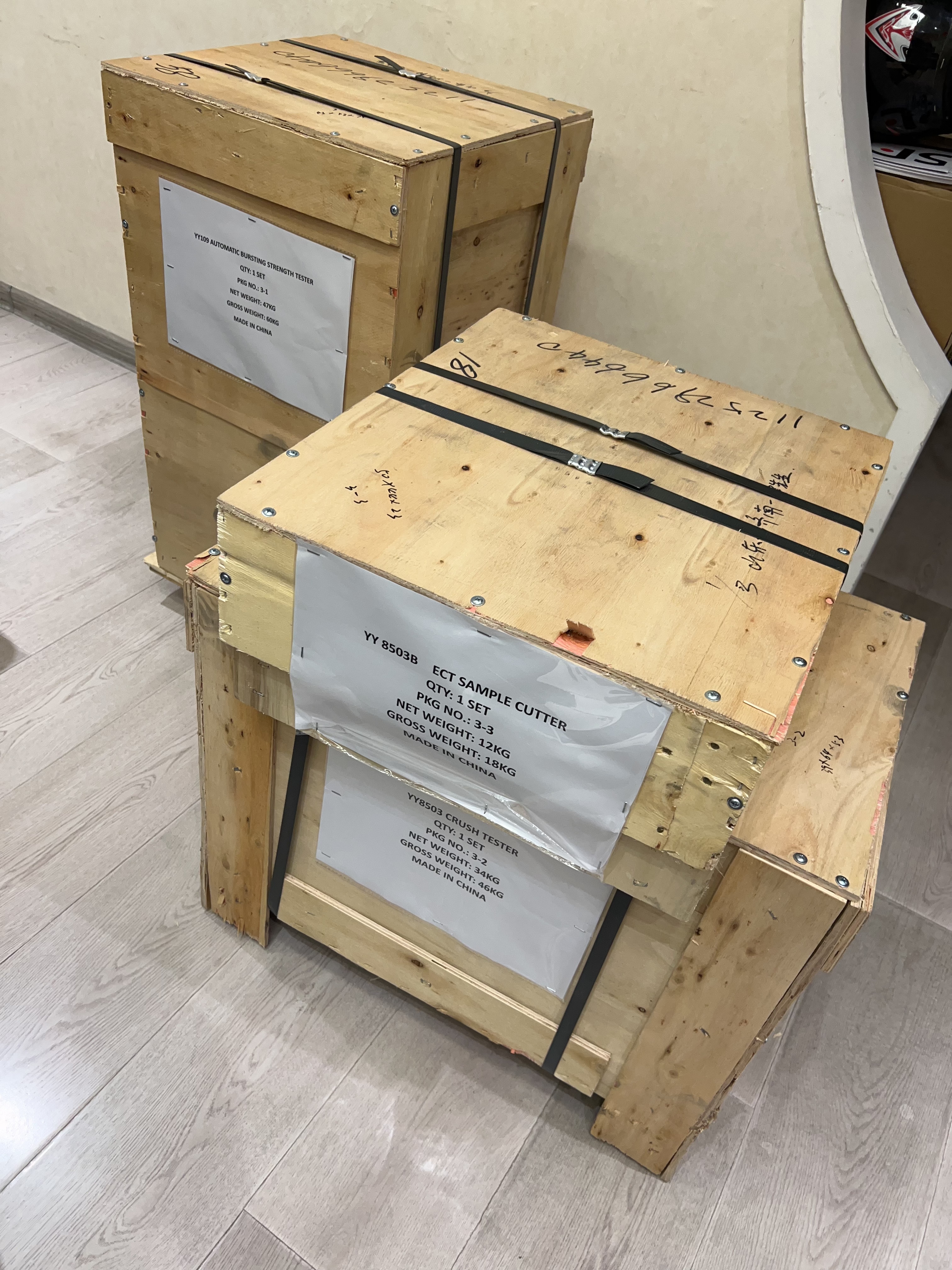
Ahead of the holiday break, we have dispatched the custom-made Automatic Crush Tester YY8503 with its ECT sample cutter YY 8503B and Automatic Bursting Strength Tester YY109 to the largest Packaging Factory in the Philippines.
These three sets of testing instruments are core testing instruments for packaging, paper products and materials. They are used to verify whether the strength of packaging materials meets the safety standards for transportation, warehousing and usage, and are widely applied in carton factories, printing houses, packaging plants, quality inspection institutions, e-commerce and logistics industries, among others.
Corrugated paper, honeycomb paper, plastic boards, paperboards, paper tubes, cushioning materials, etc.
Meet international transportation standards such as ISTA, ASTM and ISO.
Core Testing Index: Bursting Strength, referring to the maximum pressure a material can withstand against internal pressure until rupture under uniform pressurization (Unit: kPa, kgf/cm², psi).
Testing Principle: Apply uniform and continuous radial pressure to the test sample through hydraulic/pneumatic pressure until the sample ruptures, and record the peak pressure.
Core Testing Index: Compressive Strength, the maximum force a sample can withstand against deformation and crushing under uniform vertical pressurization (Unit: N, kN). It can also measure deformation and stacking limit.
Testing Principle: The motor drives the pressure plate to press down at a constant speed, applying vertical pressure to the test sample until crushing or reaching the set deformation, and record the force value and displacement.
The crush tester is mainly used for testing the mechanical properties such as compressive strength, circumferential pressure, edge pressure, and planar pressure of paperboard, cartons, paper, plastics, and packaging materials. The core indicators are divided into two categories: equipment performance indicators and material testing indicators:
Meaning: The maximum compressive force that the material / sample can withstand, which is the most basic core indicator.
Used for the overall compressive assessment of packaging cartons and paperboards.
For the lateral compressive strength of paper cores and corrugated base paper circular specimens.
The compressive strength in the edge direction of corrugated cartons, directly determining the stacking capacity of the carton.
The compressive strength of the corrugated core paper / paperboard in the plane direction, reflecting the supporting performance of the core paper.
The bonding strength between the surface paper and the core paper of the corrugated carton.
Simulates warehouse stacking and calculates the number of layers and height at which the carton can be safely stacked.
The compression deformation corresponding to the applied pressure, used to determine the yield point and collapse point.
The ability of the material to resist compressive deformation (rigidity).
Post time: Feb-08-2026