

Rubber&Plastic testing Instruments
-

YY-DH30L Double-planet Vacuum Defoaming Mixer(30L)
1. Overall Appearance and Dimensions:
1. Main Unit: 1760 mm (L) × 900 mm (W) × 1750 mm (H)
2. Mixing Vessel: Diameter × Height = 400 mm × 300 mm; Design Volume: 37 L
3. Overall Weight: 1000 kg
4. Applicable Viscosity: 1000~1 000 000 cps
2. Electrical Components:
1. Mixing Motor: 3 kW, 380 V, 50 Hz
2. Mixing Speed: 0~90 r/min
3. Revolution / Wall-Scraping Speed: 0~33 r/min
4. Dispersion Motor: 4 kW, 380 V, 50 Hz
5. Dispersion Speed: 0~1500 r/min
6. Lifting Motor: 0.37 kW, 380 V, 50 Hz
Note: The above-listed speeds represent the equipment’s achievable range. Actual operating speed shall be determined by production process. Jacket heating or cooling for the mixing vessel shall be configured according to user-specific process requirements.
-

YY-6130 Belt Flexing Resistance Tester
1. Instrument Introduction
According to the bending force of the sample, reciprocating folding tests are carried out at the specified test speed with standard spacing and weighted weights. Observe abnormal quality defects such as surface cracks, coating peeling, adhesive delamination, etc. It is applicable to strap products including belts, shoulder straps, and soft luggage handles.
2. Applicable Standards
QB/T 1333-2018, QB/T 1618-2018, QB/T 5246-2018 and other standards.
3. Product Features
(1) The machine body is coated with metal baking varnish.
(2) Special aluminum panel with imported metal buttons, sensitive operation and durable service life.
(3) Driven by high-precision premium motor, stable operation and low noise.
(4) Controlled by color touch screen with menu operation mode.
(5) Adjustable test speed; standard weights are equipped as accessories.
-

YYP650 FTIR Spectrometer
YYP-650 is a single beam FTIR spectrometer. This instrument is operated by a PC. It is a powerful tool to analyze the sample structure in many fields such as petroleum, chemical engineering and pharmaceutical.
High stable optical system
● The design integrates main components to an optical bench machined from a cast aluminum. Highly stable and no need for adjustment, re-moving troubles of maintenance of optical path.
● Precision machinery ensures high repeatability of every scanning. Advanced design concept is adopted in both optical path and every part
● The system’s corner cube optics provides easy operation without requiring complicated electronics and additional moving parts. In addition, many components of the spectrometer are user replaceable which saves time over the lifetime of the instrument.
● Internal dynamic collimation system and movable mirror driving system keep interferometer at optimum situation. Voice-coil driver and precision slide improves the ability of working in severe conditions.
● The spectrometer includes a container of desiccant that protects the beam splitter and other optical components from moisture damage.
-

YYP-650S FTIR(Fourier Transform Infrared Spectrometer)
The is a single beam FTIR spectrometer. This instrument is operated by a PC. It is a powerful tool to analyze the sample structure in many fields such as petroleum, chemical engineering and pharmaceutical.
High stable optical system
● The design integrates main components to an optical bench machined from a cast aluminum. Highly stable and no need for adjustment, re-moving troubles of maintenance of optical path.
● Precision machinery ensures high repeatability of every scanning. Advanced design concept is adopted in both optical path and every part
● The system’s corner cube optics provides easy operation without requiring complicated electronics and additional moving parts. In addition, many components of the spectrometer are user replaceable which saves time over the lifetime of the instrument.
● Internal dynamic collimation system and movable mirror driving system keep interferometer at optimum situation. Voice-coil driver and precision slide improves the ability of working in severe conditions.
● The spectrometer includes a container of desiccant that protects the beam splitter and other optical components from moisture damage.
-

YY-7000B- Bomb Calorimeter
Technical parameters Temperature measurement range: 0~40℃ (with a room temperature variation of ≤1℃ for each measurement), and relative humidity ≤85%. Temperature resolution: 0.0001K, precision: <0.01%. Testing time: 5 minutes for balancing the water temperature at the initial stage of ignition, 6-20 minutes for measuring the main temperature period after ignition, with a total experimental time of approximately 15 minutes. Instantaneous power: <500W, power supply: 220V ± 10V. ... -

YYP-P600 Differential Scanning Calorimeter
Summary:
Various thermodynamic and kinetic parameters are measured, such as specific heat capacity, enthalpy, melting and curing, glass transition temperature, crystallization rate, polymer crystallinity, sample purity, etc. It is applicable to inorganic substances, organic substances, polymer compounds and drug analysis.
Complies with but is not limited to the following standards:
1. ISO 11357-2:2020 Plastics Part 2: Determination of glass transition temperature and step height
2. ISO 11357-3:2025 Plastics Part 3: Determination of temperature and enthalpy of melting and crystallization
3. ISO 11357-6:2025 Part 6: Determination of oxidation induction time (isothermal OIT) and oxidation induction temperature (dynamic OIT)
4. ASTM D3895-14 Standard Test Method for Oxidative-Induction Time of Polyolefins by DSC
5. ASTM D6580-17 Standard Test Method for the Determination of Metallic Zinc Cont
6. ISO 21809-2:2014 External coatings for buried or submerged pipelines used in pipeline transportation systems- Part 2: Single layer fusion-bonded epoxy coatings
7. ISO 14322:2018 Plastics-Epoxy resins-Determination of degree of crosslinking of crosslinked epoxy resins by DSC
8. ISO 15874-2:2013 Plastics piping systems for hot and cold water installations – Polypropylene (PP) Part 2: Pipes
Features:
1. Industrial level widescreen touch structure is rich in information, including setting temperature, sample temperature, differential thermal signal, various switch states, etc.
2. Gigabit Ethernet, strong universality, reliable communication, support self-restoring connection function.
3. The furnace structure is compact, and the rate of rising and cooling is adjustable.
4. The installation process is improved, and the mechanical fixation method is adopted to completely avoid the contamination of the internal colloidal of the furnace to the differential heat signal.
5. The furnace is heated by heating wire, compact structure and small size.
6. The double temperature probe ensures the high repeatability of the sample temperature measurement, and adopts the special temperature control technology to control the temperature of the furnace wall to set the temperature of the sample.
7. The gas flow meter automatically switches between two channels of gas, with fast switching speed and short stable time.
8. Standard sample is provided for easy adjustment of temperature coefficient and enthalpy value coefficient.
9. Software support each resolution screen, automatically adjust the computer screen size curve display mode. Support laptop, desktop; SupportWIN7 64bit, WIN10, WIN11.
10. Support user edit device operation mode according to actual needs to achieve full automation of measurement steps. The software provides dozens of instructions, and users can flexibly combine and save each instruction according to their own measurement steps. Complex operations are reduced to one-click operations.
-

YY-5J Charpy Impact Testing Machine
Product Introduction
YY-5J Charpy Impact Testing Machine is used to test the impact toughness of the non-metallic materials such as rigid plastic, reinforced nylon, glass fiber reinforced plastic, ceramics, cast stone, plastic appliance and insulation materials. It is widely used in the scientific research institutes, universities and chemical industry as the common quality test equipment.
Main Features
A. High-precision intelligent controller equipped with LCD display which you can read the data intuitively and accurately;
B. China’s first carbon fiber lever (It has been patented); it succeeds in doing experiments without shaking involving the impact direction, improving the rigidity of materials, and concentrating impacting strength on the centroid of the pendulum, and using life increases.
C. Imported high-resolution digital encoders, higher and more stable angle measurement accuracy;
D. Aerodynamic impact hammer and imported ball bearings greatly reduce mechanical friction losses
E.Automatic calculation of the final result, 12 sets of the test data can be stored and averaged;
F. Optional interface of Chinese and English; units ( J / m, KJ / m2, kg-cm / cm, ft-ib / in )can be customized according to customers’ requirements.
G. Built-in mini printer to print the test data
-

YYP-400CT Melt Flow Indexer(ISO 1133)
I.Product Introduction
This instrument is used to measure the melt flow rate (MFR) of various plastics and resins when they are in a viscoelastic state, at a certain temperature and load, every 10 minutes. It is applicable to engineering plastics such as polycarbonate, polysulfone, fluoroplastics, and nylon with relatively high melting temperatures, as well as plastics with lower melting temperatures such as polyethylene (PE), polystyrene (PS), polypropylene (PP), ABS resin, polyoxymethylene (POM), and polycarbonate (PC) resin. It is widely used in the plastic production, plastic products, petrochemical industry, related universities, research institutions, and commodity inspection departments.
II.Meeting the standard:
n GB/T3682-2000 《Determination of the melt mass-flow rate(MFR)and the melt volume-flow rate(MVR)of thermoplastics》
n ISO 1133:1997《Plastics-Determination of themelt mass-flow rate (MFR) andmelt volume-flow rate (MVR) of thermoplastics》
n ASTM D1238 《Standard Test Method forMelt Flow Rates of Thermoplastics by ExtrusionPlastometer》
III.Testing method: Quality method, Volume method (MFR/MVR)
IV. Display method: 7-inch touch screen controller
-

YY251D Leeb Hardness Tester Factory
I. Product Introduction
The Leeb hardness tester detects hardness based on the Leeb hardness measurement principle and
can measure the hardness of a variety of metal materials. The tester adopts advanced digital probe
technology, digital signal processing is done directly on the probe, which is not easily disturbed and
provides excellent testing accuracy. The probe has a built-in direction sensor, which automatically
compensates for the measurement error in different impact directions. The instrument has a variety of
built-in hardness systems, which can be converted between Leeb (HL), Vickers (HV), Brinell (HB), Shore (HS), Rockwell (HRA), Rockwell (HRB), Rockwell (HRC) and tensile strength (σb). The instrument
adopts an impact device D suitable for assessing the hardness of common metal materials.
Standards for the product:
l GB/T 17394.1 Metallic materials-Leeb hardness test-Part 1: Test method
l GB/T 17394.2 Metallic materials-Leeb hardness test-Part 2: Verification and calibration of hardness tester
l GB/T 17394.2 Metallic materials-Leeb hardness test-Part 3: Calibration of reference blocks
l GB/T 17394.4 Metallic materials-Leeb hardness test-Part 4: Tables of hardness values conversion
l JB/T 9378-2001 Industry standard of Leeb hardness tester
l JJG 747-1999 Verification regulation of Leeb hardness tester
-

YY-DH20L Double-planet vacuum defoaming mixer
I. Overview:
YY-DH20L Double-planet Vacuum Defoaming Mixer is an all-round new model that combines the principles and components of traditional dual planetary mixers and high-speed dispersers. It is currently widely used in many fields.
Considering the characteristics of high solid content and high viscosity of power slurry, our company has developed an enhanced power mixer with higher rotation speed and larger torque on the basis of the original planetary power mixer. During the design process, factors such as the rotation speed of the agitator, stirring power, dispersion linear speed, suspension level, liquid flow pattern and the distribution of turbulence intensity in the bucket were fully considered. Its maximum high-speed dispersion linear speed can reach 25m/s, and the enhanced folding blade frame can handle any high-viscosity slurry. The new mixing method – the folding blade frame rotates clockwise in revolution and counterclockwise in rotation, ensuring no dead ends in mixing and no “climbing” phenomenon. In terms of sealing, two sets of mechanical seals plus soft and static seals ensure vacuum degree – theoretically, the sealing performance is enhanced by 30%. The Pt100 temperature sensor is in direct contact with the material, resulting in more accurate measurement and faster response speed, with an error of only ±0.5℃. This machine is composed of a base, beam, column, sealing cover, material cylinder, transmission and electrical control system.
-

YYP-QKD-V Electric Notch Prototyping Machine
1. Product Introduction
The electric Notch Prototyping Machine is used for preparing notched specimens for non-metallic material impact toughness tests with Izod and Charpy impact testers. It is suitable for laboratories in research institutions, universities, non-metallic material manufacturers and other units to produce notched specimens.
2. Reference Standards for Notch Preparation
- ISO 180:2000 Plastics — Determination of Izod impact strength of rigid materials
- GB/T 1843:2008 Test method for Izod impact of rigid plastics
- JB/T 8761:1998 Plastics Izod impact testing machines
- ASTM D256:2010 Standard Test Methods for Determining the Izod Pendulum Impact Resistance of Plastics
- ISO 179:2000 Plastics — Determination of Charpy impact strength of rigid materials
- GB/T 1043:2008 Test method for Charpy impact of rigid plastics
- JB/T 8762:1998 Plastics Charpy impact testing machines
-

YYP-QKD-D Automatic Notch Prototyping Machine
1. Product Introduction
The Automatic Notch Prototyping Machine is used for preparing notched specimens in non-metallic material impact toughness tests with Izod and Charpy impact testers. It is suitable for laboratories in research institutions, universities, and non-metallic material manufacturers to produce notched specimens.
2. Reference Standards for Notch Preparation
- ISO 180:2000 Plastics — Determination of Izod impact strength of rigid materials
- GB/T 1843:2008 Test method for Izod impact of rigid plastics
- JB/T 8761:1998 Plastics Izod impact testing machines
- ASTM D256:2010 Standard Test Methods for Determining the Izod Pendulum Impact Resistance of Plastics
- ISO 179:2000 Plastics — Determination of Charpy impact strength of rigid materials
- GB/T 1043:2008 Test method for Charpy impact of rigid plastics
- JB/T 8762:1998 Plastics Charpy impact testing machines
-

YYP-QKD-E Manual Notch Prototyping Machine
1. Technical Solution for Precision Instrument & Testing Equipment
Manual Notch Prototyping Machine is used to prepare notched specimens for non-metallic material impact toughness tests on Izod and Charpy impact testers.
2. Applicable Standards
- ISO 180:2000 Plastics — Determination of Izod impact strength of rigid materials
- GB/T 1843:2008 Test method for Izod impact of rigid plastics
- JB/T 8761:1998 Plastics Izod impact testing machines
- ASTM D256:2010 Standard Test Methods for Determining the Izod Pendulum Impact Resistance of Plastics
- ISO 179:2000 Plastics — Determination of Charpy impact strength of rigid materials
- GB/T 1043:2008 Test method for Charpy impact of rigid plastics
- JB/T 8762:1998 Plastics Charpy impact testing machines
-

YYP-DX-30 Density Balance
Application Scope
The YYP-DX-30 Density Balance is applicable to new material research laboratories in fields such as solid materials, rubber, wires and cables, aluminum products, plastic PVC pellets, powder metallurgy, minerals and rocks, EVA foamed materials, glass industry, metal products, precision ceramics, refractory materials, magnetic materials, alloy materials, mechanical parts, metal recycling, minerals and rocks, cement manufacturing, and jewelry industry.
Principle
It complies with ASTM D792, ASTM D297, GB/T1033, GB/T2951, GB/T3850, GB/T533, HG4-1468, JIS K6268, ISO 2781, ISO 1183, GB/T208, GB/T5163, GB/T 1933, BS2782 Part 6 Method 620D, ASTM D1505-68, ISO 1183 and other standards.
This solid density meter adopts imported HBM sensors from Germany for better measurement repeatability. It can directly read the density of any solid, granular and floating materials in just two steps with simple operation. Equipped with a PC water tank featuring wear resistance, fall resistance and corrosion resistance, and a 0.5cm stainless steel suspension wire that remains straight and undeformed, perpendicular to the suspension basket without touching the water tank. It can determine the percentage content of main materials (%).
-

YY-121A Rapid Moisture Meter
Application Scope:
The rapid moisture meter YY-121A is widely used in research institutes, universities, inspection institutes, metrology academies, enterprises and public institutions across various industries such as plastic particles, food, sludge, tea, corn feed, battery powder, metal powder, and dried food. It conducts rapid drying of samples to measure solid content and moisture value.
Testing Principle:
The rapid moisture tester determines the moisture content of samples by the thermogravimetric method and consists of a weighing unit and a heating unit. It can meet the quality control and production needs of the food, pharmaceutical, chemical and other industries.
Customer Benefits:
Obtain accurate results through precise weighing and temperature control; Achieve intuitive operation with step-by-step user guidelines; The robust structure ensures long-term durability of the instrument.
-

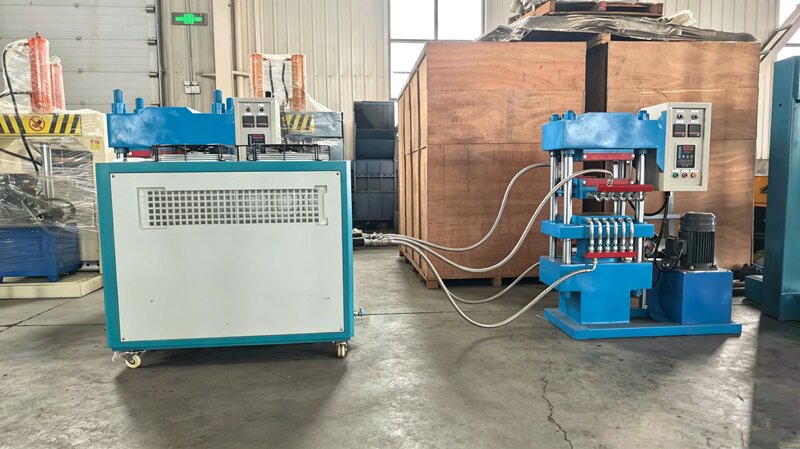
YY-30T-1 Laboratory Hydraulic Press
It is equipped with functions of automatic clamping control, automatic exhaust (settable times), automatic pressure compensation, vulcanization timing (0-9999 seconds), audible alarm upon completion and simultaneous automatic control of platform lowering.
-

YY-30T-2 Laboratory Hydraulic Press
Equipment Advantages:
1.Automatic temperature control
2. Automatic pressure replenishment
3. Precise temperature control
Technical features:
Parameter
Value
1.Nominal clamping force 0.3MN (30T)
2.Platen (hot plate)specification L 300×W 300x50mm(thickness),
Material: Q235 high-quality carbon structural steel
3.Working layers 2 layers
4.Number of hot plates 3 pieces
5.Distance between hot plates 100mm
6.Hot plate parallelism ≤0.09mm
7.Hot plate surface roughness Ra≤2.5μm
8.Heating method Electric heating
9.Heating power per hot plate 600w*4=2.4kw
10.Maximum heating temperature 300℃
11.Temperature control method Temperature control meter
12.Motor power 4.0KW
13.Plunger stroke/diameter 180mm/Ф160mm,Material:QT500-7
14.Number of oil cylinders 1 set, Material:QT500-7
15.Maximum system pressure 15Mpa
16.Structure form Four-column type
17.Number/diameter of uprights 4 pieces/Ф55mm, 45#steel
18.Control method Manual-automatic integrated control
19.Weight 750Kg
20.Customized voltage 380 VAC, 60 Hz
-

YYP-400DT Melt Flow Indexer(Fast loading)
I.Function overview:
Melt flow Indexer (MFI) refers to the quality or melt volume of the melt through the standard die every 10 minutes at a certain temperature and load, expressed by MFR (MI) or MVR value, which can distinguish the viscous flow characteristics of thermoplastics in the molten state. It is suitable for engineering plastics such as polycarbonate, nylon, fluoroplastic and polyarylsulfone with high melting temperature, and also for plastics with low melting temperature such as polyethylene, polystyrene, polyacrylic, ABS resin and polyformaldehyde resin. Widely used in plastic raw materials, plastic production, plastic products, petrochemical and other industries and related colleges and universities, scientific research units, commodity inspection departments.
II. Meeting Standard:
1.ISO 1133-2005—- Plastics-Determination of the meltmass-flow rate(MFR)and the melt volume-flow rate(MVR) of Plastics thermoplastics
2.GBT 3682.1-2018 —–Plastics – Determination of melt mass flow rate (MFR) and melt volume flow rate (MVR) of thermoplastics – Part 1: Standard method
3.ASTM D1238-2013—- ”Standard Test Method for the Determination of Melt Flow Rate of Thermoplastic Plastics Using an Extruded Plastic Meter”
4.ASTM D3364-1999(2011) —–”Method for Measurement of Polyvinyl Chloride Flow Rate and Possible Effects on Molecular Structure”
5.JJG878-1994 ——”Verification Regulations of Melt Flow Rate Instrument”
6.JB/T5456-2016—– ”Melt Flow Rate instrument Technical Conditions”
7.DIN53735, UNI-5640 and other standards.
-

YY-JA50 (1L) Vacuum Stirring Defoaming Machine(Polyurethane)
I.Summary:
1.Vacuum planetary centrifugal deaeration mixer.
2.It can evenly stir a variety of materials in a short time, including high-viscosity materials, liquids, and even nanoscale powder materials, and can also stir materials with a large mixing ratio or specific gravity difference, and simultaneously stir and defoam treatment with super strength and high speed.
II.Applications:
LED packaging/display polymer material ink, adhesive, silver adhesive, conductive silicone rubber, epoxy resin, LCD, medicine, laboratory

-

YYP-400E Melt Flow Indexer(MFR)
Applications:
The YYP-400E melt flow rate tester is an instrument for determining the flow performance of plastic polymers at high temperatures in accordance with the test method stipulated in GB3682-2018. It is used to measure the melt flow rate of polymers such as polyethylene, polypropylene, polyoxymethylene, ABS resin, polycarbonate, nylon, and fluoroplastics at high temperatures. It is applicable to the production and research in factories, enterprises and scientific research institutions.
Main technical parameters:
1. Extrusion discharge section:
Discharge port diameter: Φ2.095±0.005 mm
Discharge port length: 8.000±0.007 millimeters
The diameter of the loading cylinder: Φ9.550±0.007 mm
The length of the loading cylinder: 152±0.1 mm
Piston rod head diameter: 9.474±0.007 mm
Piston rod head length: 6.350±0.100 mm
2. Standard Test Force (Eight Levels)
Level 1: 0.325 kg = (Piston Rod + Weighing Pan + Insulating Sleeve + No. 1 Weight) = 3.187 N
Level 2: 1.200 kg = (0.325 + No. 2 0.875 Weight) = 11.77 N
Level 3: 2.160 kg = (0.325 + No. 3 1.835 Weight) = 21.18 N
Level 4: 3.800 kg = (0.325 + No. 4 3.475 Weight) = 37.26 N
Level 5: 5.000 kg = (0.325 + No. 5 4.675 Weight) = 49.03 N
Level 6: 10.000 kg = (0.325 + No. 5 4.675 Weight + No. 6 5.000 Weight) = 98.07 N
Level 7: 12.000 kg = (0.325 + No. 5 4.675 Weight + No. 6 5.000 + No. 7 2.500 Weight) = 122.58 N
Level 8: 21.600 kg = (0.325 + No. 2 0.875 Weight + No. 3 1.835 + No. 4 3.475 + No. 5 4.675 + No. 6 5.000 + No. 7 2.500 + No. 8 2.915 Weight) = 211.82 N
The relative error of the weight mass is ≤ 0.5%.
3. Temperature Range: 50°C ~300°C
4. Temperature Stability: ±0.5°C
5. Power Supply: 220V ± 10%, 50Hz
6. Working Environment Conditions:
Ambient Temperature: 10°C to 40°C;
Relative Humidity: 30% to 80%;
No Corrosive Medium in the Surroundings;
No Strong Air Convection;
Free from Vibration or Strong Magnetic Field Interference.
7. Instrument Dimensions: 280 mm × 350 mm × 600 mm (Length × Width × Height)