


A One-Step Guide to Selecting the Right Type
Select based on five dimensions: workpiece size, material, hardness range, precision requirements, and application scenarios. No need to worry, just follow the guide and you can make a decision.
I. First, classify into three major types of hardness testers
1. Rockwell Hardness Tester (HRC/HRB/HRA)
Suitable for: quenched steel, die steel, bearings, tools, heat-treated parts
Advantages: high precision, widely used in national standards, standard equipment for factory quality inspection
Disadvantages: must take samples / desktop type, large parts cannot be moved or tested on-site
What to measure:
HRC: quenched high-hardness steel (dies, tools, gears)
HRB: brass, aluminum, low-carbon steel, soft steel
2. Brinell Hardness Tester (HB)
Suitable for: cast iron, cast steel, aluminum alloy, copper alloy, rough forged parts
Advantages: large indentation, most accurate for coarse-grained and non-uniform materials
Disadvantages: large indentation, destructive, low efficiency, suitable for laboratory spot checks
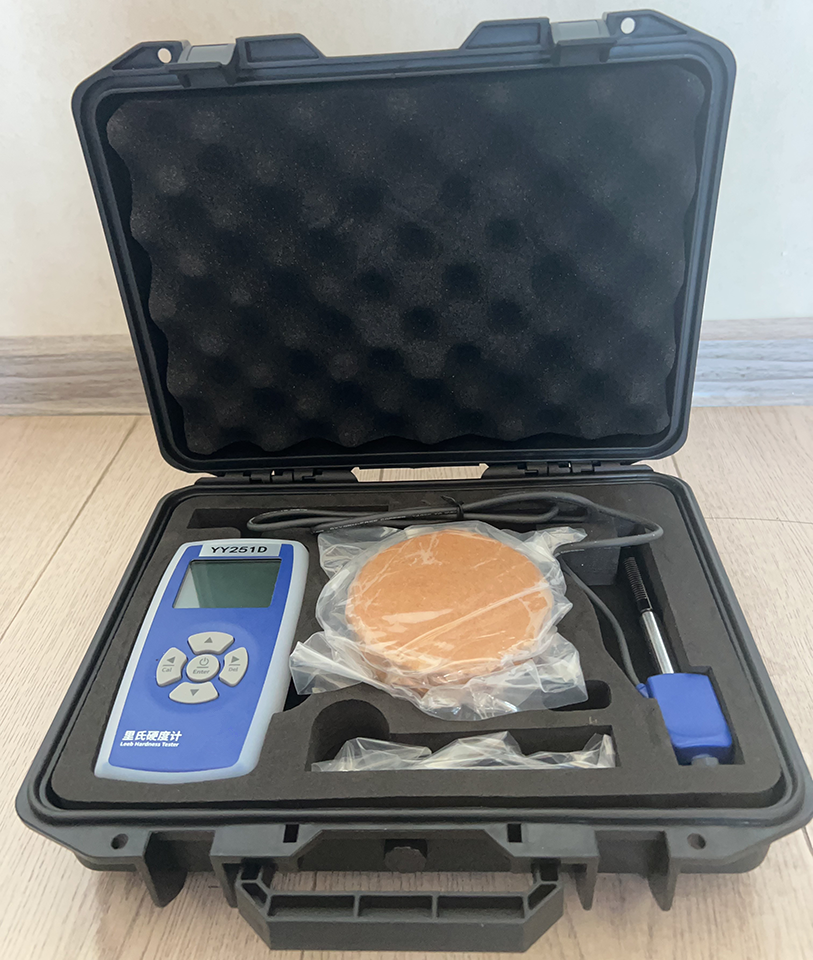
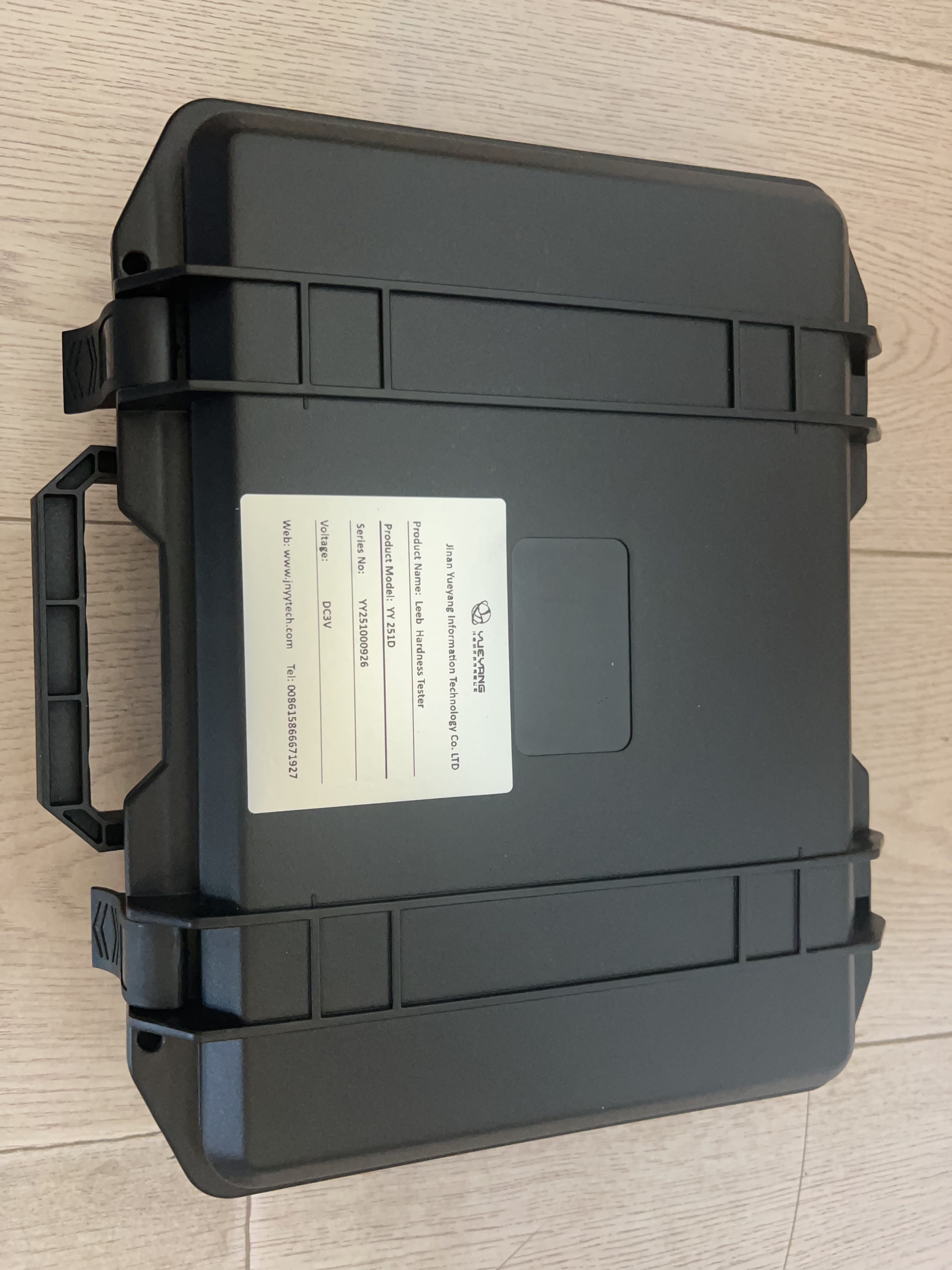
3. Leeb Hardness Tester (portable HL to HRC/HB/HV)—YY251D Leeb Hardness Tester
Suitable for: large parts, on-site testing, parts that cannot be disassembled, heavy molds, rolls, shafts
Advantages: handheld and portable, non-destructive, no need to take samples, can be used in vertical, horizontal, or overhead positions
Disadvantages: slightly lower precision than desktop Rockwell, large errors for thin-walled and small parts
II. Select based on application scenarios (most practical)
Scenario 1: workshop laboratory, incoming material / heat treatment quality inspection, high precision required Choose a desktop Rockwell hardness tester
Preferred for general hardware, die-making, and heat treatment factories.
Scenario 2: cast iron, castings, aluminum alloy, rough forged parts
Choose a Brinell hardness tester
Scenario 3: large parts that cannot be moved, on-site testing, molds / rolls / large shafts Must choose a portable Leeb hardness tester
Scenario 4: small parts, thin sheets, surface hardness of carburized and nitrided layers Choose a Vickers hardness tester (HV)
Suitable for: thin sheets, tool edges, coatings, hardened layers.
III. Select based on workpiece thickness / size
Large, heavy, and immovable parts → Leeb
Standard samples, small parts, can be placed on a desktop → Rockwell
Thin parts < 3mm, surface hardened layers → Vickers
Casting blanks, non-uniform materials → Brinell
IV. Select based on hardness level
Soft materials: aluminum, copper, low-carbon steel → HRB / HB
Medium hardness: quenched and tempered steel, structural steel → HRC / HB
High hardness: quenched dies, tools, bearings → HRC / HV
Very thin surface layers / carburized layers → HV Vickers
Post time: May-13-2026