


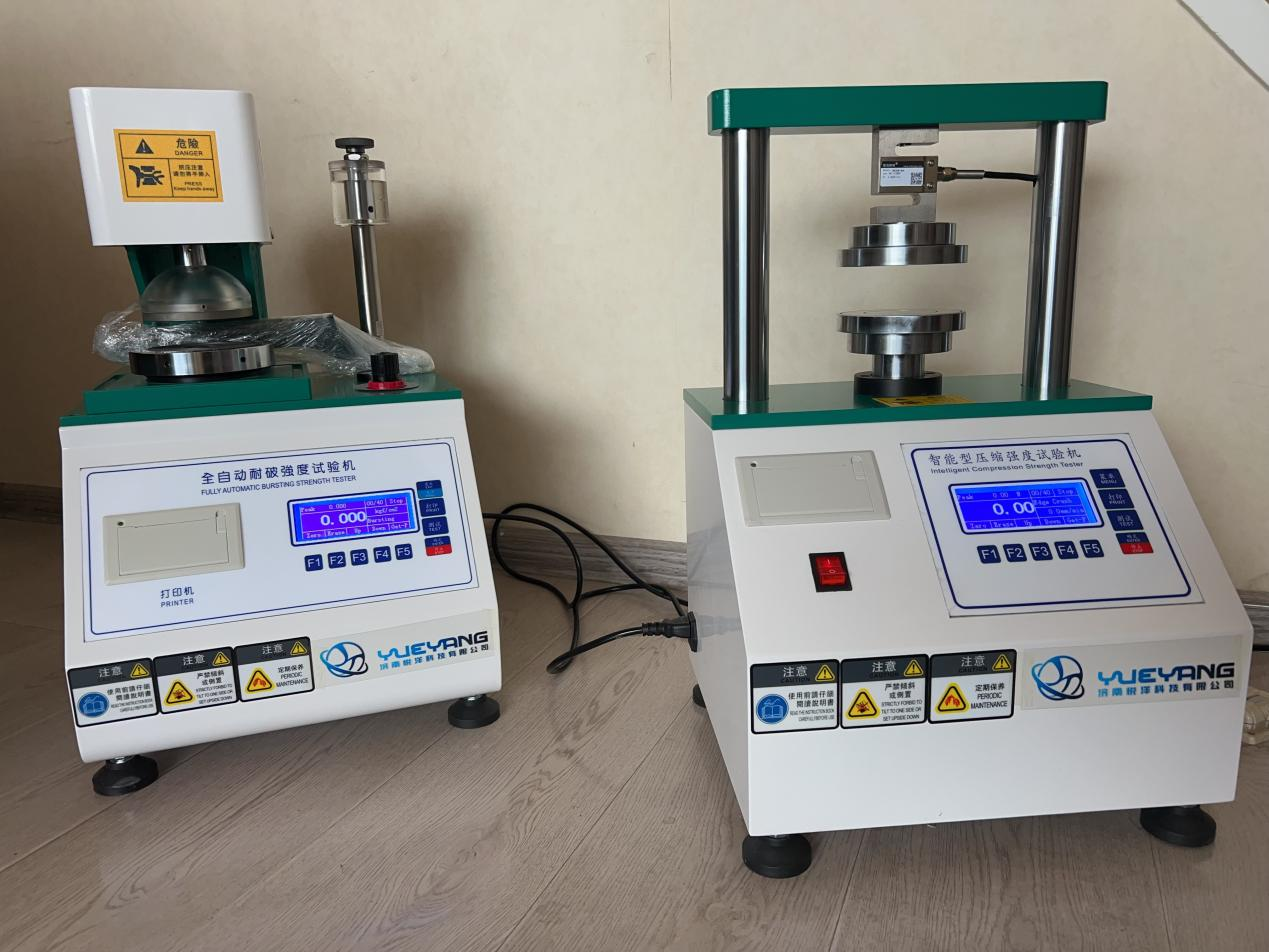
The YY8503 crush tester and the YY109 Automatic burst strength tester are important instruments for testing the physical properties of paper, paperboard and cartons. They play a crucial role in the quality control of packaging materials. The following are the usage methods and precautions for these two instruments.
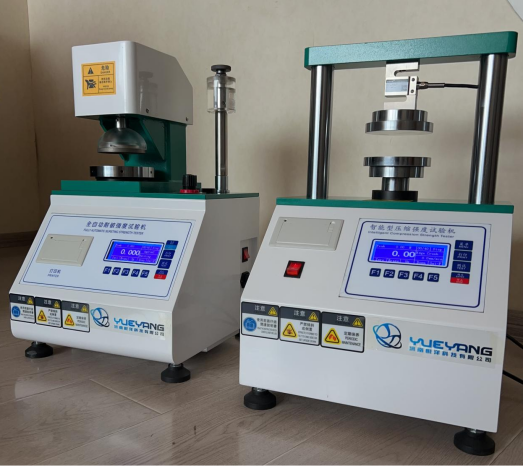
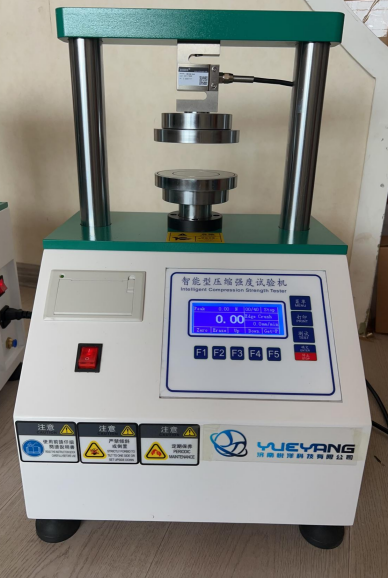
The Use of Crush Tester:
The crush tester is mainly used to measure the ring compressive strength(RCT), edge compressive strength(ECT), bonding strength(PAT) and flat compressive strength of paperboard(FCT). The usage method is as follows:
1. Preparation work:
1). Ensure that the working environment of the instrument meets the requirements, with the temperature ranging from (20 ± 10)℃.
2). Check whether the size of the pressure plate and the test stroke of the instrument comply with the testing standards.
2. Sample preparation:
1). According to the testing standards, cut the sample to the specified size.
2). Ensure that the corrugated direction of the sample is perpendicular to the two pressure plates of the compression tester.
3. Test process:
1). Place the sample between the two pressure plates of the compression tester.
2). Set the test speed, which is default at 12.5 ± 3mm/min, or manually adjusted to 5 - 100mm/min.
3). Apply pressure to the sample until it collapses.
4. Result reading:
1). Record the maximum pressure that the sample can withstand, which is the compressive strength of the sample.
2). The test results can be output through the data printing function.
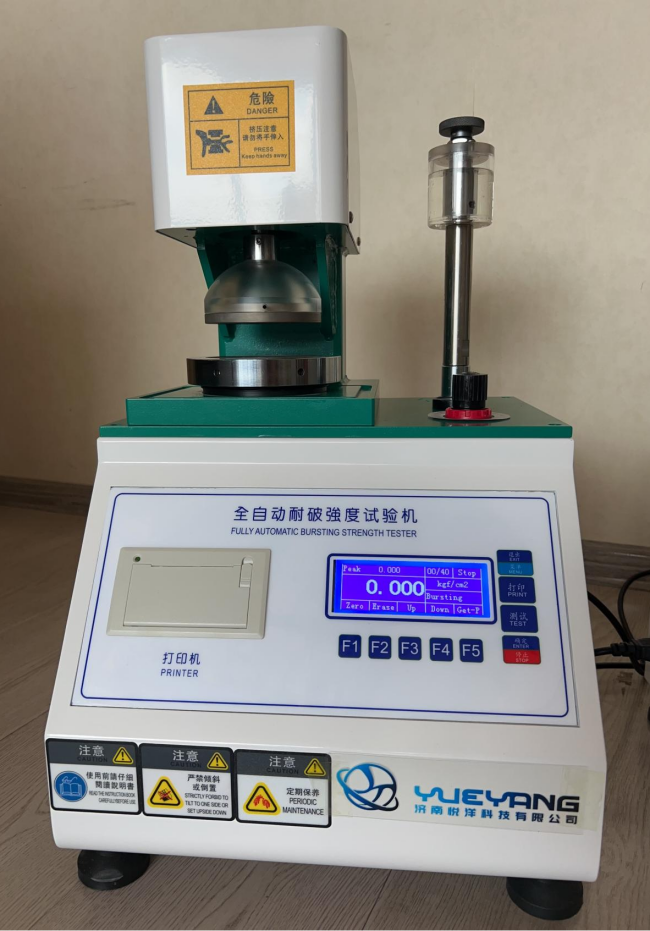
Usage of the Burst Strength Tester:
The burst strength tester is mainly used to measure the burst strength of paper. The usage method is as follows:
1. Preparations:
1). Ensure that the working environment of the instrument meets the requirements, with the temperature within the range of (20 ± 10)℃.
2). Check the force source of the instrument to ensure its accuracy, with the precision reaching 0.02%.
2. Sample preparation:
1). According to the test standard, cut the sample into the specified size.
2). Ensure that the surface of the sample is flat and has no obvious defects.
3. Test process:
1). Clamp the sample in the fixture of the burst strength tester.
2). Apply pressure to the sample until it bursts.
3). Record the maximum pressure value at the time of sample rupture.
4. Result reading:
1). Calculate the burst strength of the sample, usually in units of kPa or psi.
2). The test results can be output through the data printing function.
Notes for Attention:
1. Instrument Calibration:
1). Regularly calibrate the compression tester and burst strength tester to ensure the accuracy of the test results.
2). Calibration should be conducted in accordance with relevant standards, such as ISO2758 "Paper - Burst Strength Determination" and GB454 "Method for Determining Burst Strength of Paper".
2. Sample Processing:
1). Samples should be stored in a standard environment to avoid moisture or heat exposure.
2). The size and shape of the samples should comply with the testing standards to ensure the comparability of the test results.
3. Safe Operation:
1). Operators should receive professional training and be familiar with the usage methods and safety operation procedures of the instruments.
2). During the testing process, be careful to prevent samples from flying out or instrument malfunctions from causing injuries.
By correctly using the compression tester and burst strength tester, the detection quality of paper, paperboard, and cartons can be effectively improved, ensuring that the performance of packaging materials meets the requirements.
Post time: Aug-05-2025